
Digital skills drive prepares apprentices for the factories of the future
Background
Digital technologies such as sensors, artificial intelligence (AI), and predictive maintenance are becoming central to modern manufacturing. Equipping the next generation of engineers and manufactures with the skills to use these tools effectively is vital for staying competitive.
To help address this, the National Manufacturing Institute Scotland (NMIS) partnered with West College Scotland and Ailsa Reliability Solutions Ltd to deliver hands-on training for apprentices across the west of Scotland. The initiative was part of NMIS’ Data-Driven Design & Manufacturing Colab (D3M_Colab) programme, which helps companies run data-driven projects that solve industrial challenges, boost productivity, and upskill employees to manage digital systems independently.
Challenge
Despite the benefits of digital technologies, adoption in the UK manufacturing sector remains uneven. According to the UK Innovation Report 2025[1], only 45% of manufacturers have fully implemented tools such as AI, robotics, or data analytics, even though 86% recognise their importance for future growth.
Apprentices often learn technical theory but have limited opportunities to apply their skills with industrial data and advanced equipment. Closing this gap is crucial to help apprentices confidently use data on the shop floor, tackle real-world problems, and contribute to a skilled, adaptable workforce.
What did NMIS do?
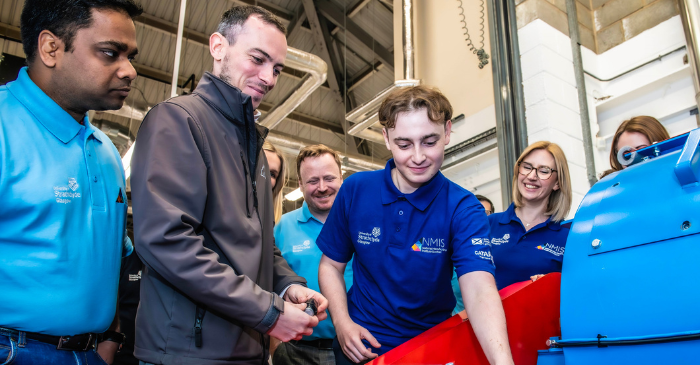
NMIS worked with Ailsa Reliability to develop a bespoke fan skid – a specialist demonstrator that simulates real manufacturing conditions. Installed at West College Scotland’s College Local Innovation Centre (CLIC), the fan skid allows apprentices to:
- Fit sensors and digital monitoring equipment
- Collect operational data
- Analyse results using professional software
With guidance from NMIS, the apprentices learn to interpret these insights to identify early signs of equipment failure, reduce unplanned downtime, lower maintenance costs, and support more sustainable manufacturing by minimising energy waste and extending equipment life.
The College is now working with partners to develop a range of upskilling courses that support students to understand the application of data in engineering and maintenance. Courses planned will include an introductory online program to build foundational understanding and a hybrid course aimed at technicians and apprentices that will offer a progression pathway to further NMIS support across AI in manufacturing.
Impact
The initiative helps apprentices connect technical skills to practical outcomes, demonstrating how data-driven approaches can improve efficiency, reduce waste, and support more sustainable manufacturing. It also develops their analytical thinking and problem-solving abilities, giving them the confidence to make informed decisions that benefit both operations and the wider business.
By exposing apprentices to digital technologies in a simulated industrial setting, the project contributes to a more adaptable and future-ready workforce capable of driving innovation and continuous improvement in manufacturing.
Jamie Burns, managing director at Ailsa Reliability, said: “We’re always looking for ways to improve the sectors we operate in by helping companies make better use of data through industrial IoT and condition monitoring. Building knowledge and hands-on skills in these areas can reduce downtime, cut waste, and improve efficiency. Our partnership with NMIS and West College Scotland is a great way to develop these strengths and support more sustainable, future-ready businesses.”
Jim McAllister, assistant principal enterprise & skills at West College Scotland, added: “This partnership shows how colleges and industry can work together to create practical, forward-thinking training. By combining our teaching expertise with insight from NMIS and Ailsa Reliability, we’re giving apprentices real-world experience with the tools and approaches they’ll use on the job. It’s about more than technical skills – it also builds confidence, problem-solving, and adaptability, which are just as important in the workplace.”